
Ultimate Guide to Freelancing - Part 2: Finding Work
Finding Work via Your Close Network
Start with your close network of friends, family, and former colleagues
Take a friend out for coffee (or virtual coffee date in Covid-19 times)
Email an old professor or colleague asking if they know of any opportunities or have any advice
Google Hangouts, Zoom, and FaceTime are great options for video chatting
Any sound decision is based on research and advice from experts – these conversations with your close network will help you
Ultimately, these relationships build over a lifetime and are based your behavior and/or talent
It may be wise to secure your first freelance gig prior to quitting your 9-to-5
Online Job Search
Online resume and portfolio sites are very helpful. These include:
LinkedIn makes your resume easily searchable by hiring agents
LinkedIn can also be used to connect with prospective companies or like-minded individuals
Sites like Working Not Working or Behance host your portfolio (and resume) and can help potential clients or employers find you
Keep an open mind. You might find something on a questionable job site, or even Craigslist (which is how I got my first internship)
Once you find an opportunity, connect with the company via their website’s contact form if the site you found the job seems questionable
If you don’t hear back in a week email or call again
Persistence pays off, as many of these companies need new employees, but are so busy they accidentally lose good candidates in the mix
The best way to secure a job is via a recommendation. LinkedIn is helpful in this situation as you can see if you have any connections
The more you want the job, the more time you should invest in researching the company and employees. This will help you craft your introductory email as an argument for how you’ll supply value to the company if hired
Keep a Google Document of important contacts, hiring sites, and prospective companies or clients. Download my template below: (I’ve also included some helpful links)

Recruiters
Recruiters will message you on LinkedIn and can be very helpful
These recruiters are in-house employees of the company hiring
If they have a specific job in mind and you are interested, continue the conversation. If not, say no thank you, ask for them to stay in touch, and add them to your network for future opportunities
By adding them you are more likely to be found by their vast network of contacts
Search for and connect with recruiters by sending a friendly message
Staffing Agencies
Staffing agencies or independent recruiters, are not employees of the company hiring, but rather work for an independent company that recruits for numerous other companies
Some creative staffing agencies I’ve heard of include: (This is not an endorsement)
Search Google for staffing agencies in your area
Early in your career, staffing agencies can help you secure gigs you otherwise wouldn't be able to secure
Staffing agencies’ gigs come with strings like lower pay and usually restrictions on working with their client in the future
Sometimes staffing agencies are required to submit a certain number of applicants to their client, so don’t feel bad if there are a lot of dead ends
Feel confident to negotiate on terms and rate
Get on a staffing agency’s email list to be notified of opportunities and interesting companies
Networking
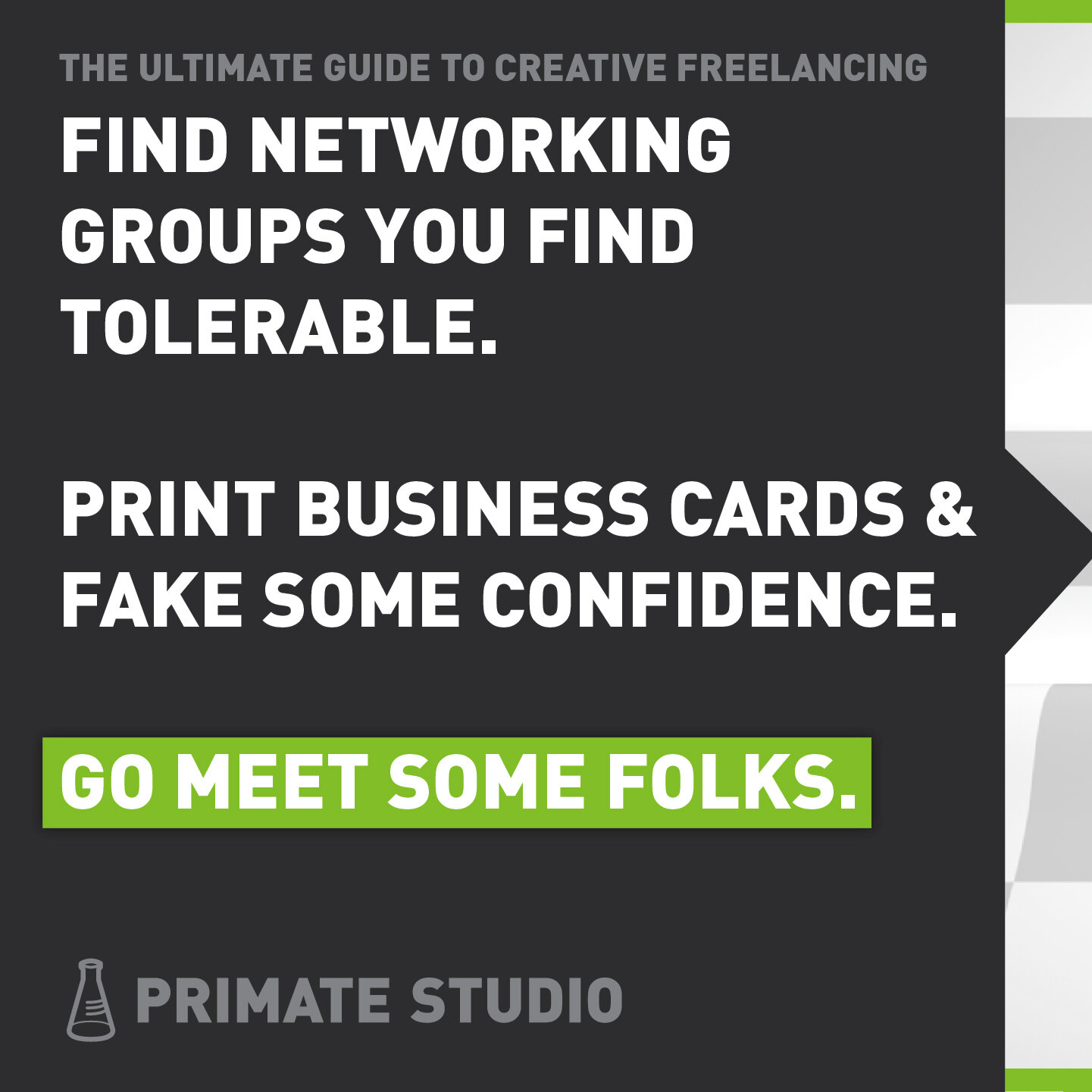
Networking events are exhausting, but can lead to gigs
Fake some confidence, print business cards on Moo.com, and go to them regularly
Search online for networking groups or events to join that you find tolerable. I like the “Out Professionals in Advertising & Media” group or the brand new group I organize, Brooklyn Creative Club (Follow us on Instagram to join!)
Industry professional groups can be the most helpful for networking, job hunting, and resource finding. Check these out:
Jump to:
Introduction: Ultimate Guide to Creative Freelancing
Part 1: Starting: Part-time vs. Full-time, Contractor vs. Freelancer
Part 2: Finding Work: Online Job Search, Recruiters, Staffing Agencies, & Networking
Part 4: Taxes
Part 5: Determining your Rate
Part 6: Paperwork: Contracts, Non-Disclosures, Quotes, Estimates, & Invoicing
Part 7: Motivation: Schedules, Deliverables, & File Organization
Part 9: Advice: Client Relationships, Best Practices, & General Advice
Love,
Paul
For snarky design commentary follow @gpaulbenson on Twitter
And see our previous blog post: “Tools & Resources for Designers” for additional advice.
Best of luck! And please send your tips or questions my way by commenting below! Also, would you be interested in video tutorials? Let me know!
Special Thanks to:
Channing Ritter (Freelance Advisor)
Brendan Bergen (Copywriter & Social Media Advisor)
Hana Sato (Creative Recruiting Advisor)
Aliza Adam (Freelance Advisor)
Selwyn Rocha (Graphic Design Advisor)
Anna Lu (Professional Feedback)
Tero Honkala (Marketing & Creative Media Feedback)
Chrissy Raftery (Professional Feedback)